Friday, December 5, 2014

Table of Contents

    I. Where Do I Go from Here?
    II. Up the Slope
    III. Indefinite AFK
    IV. Forward
    V. Prelude to Midterm Portfolio

    VI. More Than a Grade: Introduction
    VII. More Than a Grade
    VIII. My Affection: Introduction
    IX.
    My Affection
    X. Stepping Stones: Introduction
    XI. Stepping Stones
    *These entries are in reverse chronological order, in accordance with the organization of blog posts.

Where Do I Go from Here?


I often hear my peers complaining about academic essays. They think they are stifling, adhere to a strict set of rules and guidelines where one bifurcates an argument and chooses one side to support while creative writing is all about description and storytelling. There is no use, however, in thinking traditional, academic essays and creative writing as two separate entities. Academic writing and creative writing assignments are designed to teach different skills, and it is up to each individual person to experiment and mesh the things he learns from each genre into his own writing style.

I knew this before I walked into my first English class as a freshman in college; however, I had not been able to stop myself from dissociating my academic writing from any other form of my writing. I had a very distinct style to my academic writing, and I found myself very hard-pressed to use first person and specificity in regards to my personal experiences. I have no qualms against talking about myself and my personal experiences, but knowing that my writing was for class created a mental block that I struggled to climb—I felt like my writing had to be strictly academic, and once divulging in personal experiences, I was simply having a casual conversation. As a written communicator, I felt as though my academic writing had snuck its way into my other writing styles, but the converse was not true.  

I spent the first half of the course focusing on rectifying the disconnect between my writing styles in personal narratives, be it style or specificity. By the end of my revision and reflection process, I had successfully managed to make my essays personal and tell my story. Academic papers did not simply need to be a strictly logical argument in a claim-evidence-warrant format; they could utilize stories.

 By the end of the first process, I found myself asking ‘Where do I go from here?’ Naturally, with my wordiness, the next step in my writing process is to execute more concision. Thinking about the remainder of the quarter, I wondered how I would go about eradicating what others considered redundancy in my writing and thought. What exactly did others consider redundant when I required thoroughness to connect my thoughts? I questioned if I could even consider the validity of others’ opinions when my peers missed or complained about my deliberate stylistic choices while those who were more experienced caught on quickly and expressed positivity toward them.

In the end, I have yet to focus specifically on concision. Upon reflecting on my writings in the second half of the course, the majority of what even considered revisable focused on specific techniques in writing. Craft a two-hundred word sentence. Write a piece using only six words per sentence. Craft an extended metaphor. What connected my pieces were my use of characters and storytelling to achieve these techniques.

Of the three assignments, the only one that most directly challenged my wordiness was “Indefinite AFK,” a story created by a string of six-word sentences. By limiting myself to six words per sentence, I had little room for stylistic embellishments. Instead, I was forced to embrace short sentences and fragments to convey the story I wished to tell. There is still repetition and rhythm when reading, but I had to learn to make do without the long strings of descriptors or the syntactical modeling that I am often attached to. To embellish and expand “Indefinite AFK,” I drew upon my own experiences with my friends and centralized the characterization on a hobby that I have: role-playing.

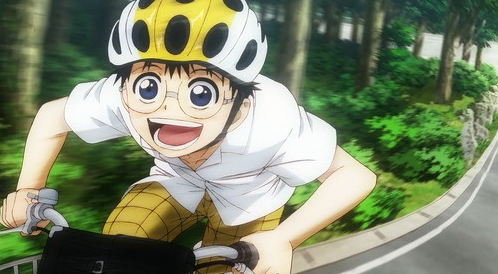
“Up the Slope” and “Forward” draw on my previously addressed obsession with Yowamushi Pedal (see: My Affection) and my love for role-play. “Up the Slope” was originally crafted as a two-hundred word sentence describing the main character of the series; however, text walls are painful to read, and my writing was stiff and forced. When revising it, I reorganized the structure and built a story—albeit reminiscent of the form of a summary—and instead of writing a single two-hundred word sentence, used the techniques to vary sentence length throughout. I challenged myself to keep one sentence substantially longer than others, totaling one-hundred and thirty words. “Forward,” however, is written as I would write a short story, or a novel, with the goal of the structure modeling an extended metaphor.

Concision continues to be a hobgoblin that I need to address; however, my priorities fall to stylistic exploration and interest in writing. It is necessary for each person to have multiple styles, approaching different forms of writing in various ways, but it is also important for me to blur the lines that I have created for myself in efforts to smuggle my personality and interests into my writing. As an artist, especially, storytelling techniques and varieties capture my attention first and foremost, especially when allowed to dictate my own direction and progress.  

Wednesday, December 3, 2014

Up the Slope

Disclaimer: Onoda, Sakamichi is a character from Wataru Watanabe's Yowamushi Pedal.


Onoda, Sakamichi had an unhealthily obsession with anime. He was a typical anime nerd, collecting figurines and exclusives, eager to discuss theories with others.  He never thought himself athletic before he joined the cycling club—he didn’t even know that cycling was a sport; however, Onoda was a man who loved riding his bike.

The boy enjoyed the pure pleasure of experience when riding his bike: he enjoyed watching the scenery change and pass, transitioning from cityscape to nature and back, enjoyed the rhythm of pedaling and moving one foot after another, the revolutions therapeutic, even. He never complained about the journey or how long his trip took, not when he had his destination envisioned clearly and perfectly, resting at the forefront of his mind, the image just before his eyes as though it were reality—as though he were already in Akihabara before he even arrived.

Akihabara. The city is known to be a hub for anime and video games. In order to feed his obsession, Onoda makes a trip to Akihabara every weekend when school is in session and every day during summer vacation. Rather than spend 200 yen on bus fare, Onoda preferred to bike 40 kilometers to Akihabara so he would have more money to buy merchandise. Enthusiastic and one-track-minded about anime as he was, Onoda didn’t even consider the fact that he was training his body like an athlete, much less for cycling.

In a twist of fate, Onoda found himself in the cycling club in high school. In fact, he was a climber—just what the club needed for their Inter High team. He was a valuable asset, and he found himself incredibly thrilled by the prospect of riding bikes with friends.

When training and racing formally, Onoda’s inexperience is clear. His riding is sloppy, inefficient—he wobbles around, takes the outermost route on a turn, and has no concept of pacing himself. He shouldn’t have been able to stand a chance against other cyclists, but he barrels right through the obstacles ahead of him. The time he spent riding to and from Akihabara trained his legs and provided him with an outstanding cadence on a road racer. But Onoda’s true strength comes not from his training but rather his sheer love for bicycling, especially with companions to share the journey.

Onoda is all too eager to chase his teammates or rivals. He’s laughed at and underestimated because he lacks efficiency, but as his rival dances to the top of the slope, grinning, head held high, looking down at him, Onoda is hunched over his handlebars—head down, eyes downcast, tension in his shoulders, arms, and hands visibly tense, his posture like that of a man who has been completely devastated and has given up—preparing himself to roar as his adrenaline rush kicks in, allowing him to raise his cadence thirty revolutions per minute, his breathing labored, lungs struggling, gasping for air, only to look up with a grin spreading from ear to ear, fierce determination burning in his eyes, the light in them dancing with pleasure and excitement, making it known to the world that he had been smiling all along.  Onoda, Sakamichi is a man who smiles when he climbs.

Despite a mountain of unfavorable circumstances, whether it’s his lack of experience or a wall of one-hundred people ahead of him, road racing is fun. As long as road racing is fun, Onoda has the ability to push himself to the peak—literally and figuratively—of the mountain and emerge victorious at the top of the world.


Works Cited
Watanabe, Wataru. Yowamushi Pedal. Akita Shoten. 2008-2014. Print.

Tuesday, December 2, 2014

Indefinite AFK


He makes her feel horribly sentimental. The feeling bubbles up inside her. She waits for him every night. Eyes wide, she tracks every movement. She sits there, silent, waiting, hoping. The computer beeps and she jumps. Frantically, she pulls up her Skype. There—the green by his name! Maybe, just maybe, the message sends. She holds her breath, hitting Enter. Still, she braces herself for disappointment. Her last messages haven’t reached him. His Skype’s been glitching for months. 

In that moment, she made a wish. No different from any other night. Please respond; I want to talk. I want to role-play with you. 

She wanted to talk to him. These past months, communication became scarce. An inevitable result of busy lives. A few “hello’s” were not sufficient. They summarized their lives, joked around. They were always pressed for time. How are you; wishing you well. Grasping for normalcy, hoping everything’s fine. She loved catching up with him. But still, it was not enough. She was greedy; she wants time. She wants to read his replies. Posts in reply to hers, specifically.

Neither of them was at fault. At eighteen, society dubbed them “independent adults.” They were busy; they had responsibilities. Last year, their time was abundant. Last year, they chatted near daily. They role-played every chance they got. Before he moved away from home. Before she moved to her university. He was working; she was studying. Time zones were difficult to navigate. It was doable, but communication lessened. As time passed, they were drifting. Moving on with their busy lives. 

They are still closer than most. Especially considering how role-players lose communication. Sometimes they fall out of touch. One might develop a new interest. Fandom hop, leaving the other behind. 

Some time passes without any communication. They pick up where they left. Both as friends and role-play partners. She doesn’t believe this will change. A great feeling: familiarity and trust. It’s a mark of strong friendship.

Usually people begin to move on. Time apart tends to weaken friendships. Like a relationship, you move on. Time lessens pain from being ignored. You expect it or stop caring.  

However, her longing grows each day. She’s not sure if it’s nostalgia. She wants to reset the clock. Wants to chat every day again. She wants to discuss existential questions. The inadequacies of popular scientific theories. The marvels of recent scientific exploration. Bond over their favorite fictional characters. Use the codes only they know. Most importantly, he’s her role-play partner. Such bonds are difficult to explain. Inactivity leaves the other feeling empty. Perhaps it’s because of collaborative storytelling. The improvisation and uncertainty while writing. 

Sometimes she’d think of an idea. She takes note to tell him. That is, once they have time. She saves each idea for later. Because she knows he’ll enjoy them. Sometimes she can’t help feeling disappointed. Would have been fun role-playing that. She’s attached to his writing style. She is attached to his characterizations.  

Finding new partners doesn’t replace him. New role-play partners means new friends. But every role-player, writer, is different. 

He was—is—her best friend. It’s been months of just hello’s. He’s not doing it on purpose. He isn’t trying to ignore her. He wasn’t even aware of it. Her messages to him weren’t sending. A problem with his messenger alone. She messages him, receives no reply. She feels horribly reminiscent of Gatsby. Gazing at the green “available” dot. She sends greetings, holding her breath. Ten minutes pass with no response. She’s disappointed, but then Skype beeps.
Hi; I got that last message! I have time; want to role-play?

Monday, December 1, 2014

Forward


A brief introduction:
This piece is an extended metaphor that utilizes a structure and storytelling to convey its message. The pacing and length of story-elements throughout are very deliberate choices in regards to the metaphor.

The story is based on a character in Wataru Watanabe's Yowamushi Pedal named Arakita, Yasutomo. While the show briefly provided his backstory, I took upon his persona and expanded upon his character—essentially role-playing him—to embellish the metaphor. Given how short the assignment was, I decided that it would be best to utilize a pre-constructed character rather than attempt to establish my own.

Additionally, I've included an image of the character in question to better convey his personality.

I entered high school learning forward to a bright future as a baseball player. I had a bright future—I was the best pitcher in the prefecture. I always felt like my teammates could trust me with their dreams; they were always cheering me on, never doubting that I would overcome the obstacles in front of me. After each game, they would punch my chest, grinning from ear to ear and say something like “Good work!” or “I knew we could count on you.” I felt awesome.
 
But as fate would have it, I broke my arm the summer of my second year. It happened just before I was supposed to make my starry debut at Hakone’s regionals. I couldn’t pitch.

I had to drop out.

No one came running to my hospital bed while I fumed over my luck. No one came to sympathize. No one came to grieve the loss of the team’s designated pitcher. I sat coped up in my hospital room, leg twitching and shaking the bed with nervous energy that had nowhere to go. Whatever—I didn’t want pity anyway.

When I finally made it back to school a few days later, my teammates would mutter condolences as we passed in the hallways.

“Arakita, sorry to hear you were injured.”

“Too bad. Looks like you won’t be coming with us.”

“Sorry. Maybe next year.”

All I could do was nod at their words. They felt so empty. 

I couldn’t help but walk to the baseball field after school. I watched them practice, the new pitcher gaining favors from the team all around. In a week, the team had gotten familiar with him. It was as though I had never been part of the team.

My teammates hadn’t given a damn. I was tossed aside. Forgotten. Yet I couldn’t move on; I kept thinking about them, about the ‘what-ifs.’

I tried hanging out with other groups of people, but no one ever stayed. I chased them away.
“Get me a Pepsi! I told you I hate Coke!” I threw the Coke can on the ground and stomped on it, shattering the aluminum and sending it flying, soda spewing out in every direction as it flew through the air.
Stupid, useless bums. Morons. Garbage. I hated the world. I hated everyone.

My moped became the only thing that I believed wouldn’t double cross me. With a twist of my wrist, it could take me anywhere—wherever I wished, wherever I told it to go. 

Go. I gripped the handlebars harder and leaned to the side as I turned, adrenaline pumping and wind rushing in my face as I pulled by body and scooter closer and closer to the ground.

Go. Take me to a place far ahead. Take me to a world where no one else exists: a world where nothing bad ever happens.   

But no matter where I went, nothing was satisfying. My memories always crept back up on me, making me remember stupid things.

If only I hadn’t been injured!

One day, I ditched class early and hopped on my moped. I raced up Mt. Hakone, stopping halfway up once I found a rest spot. Parked there, I had a good view down at the school. It was disgusting. I wanted to transfer or drop out. Whatever I could do to get away from this miserable place. I sat there for hours, fuming to myself over resurfaced memories.

I was interrupted from my thoughts when a group of cyclists raced past, a few club members veering away from the group toward the rest stop to refill their water bottles. I ignored them, but there was one person lagging behind, his bike parked next to mine. I couldn’t help but stare.

The frame was so thin. How did it support him? Why did these losers even bother riding bikes when mopeds exist? Bikes are so stupid—obsolete!

At that moment, I didn’t care who it was. I wanted to take my frustration out on someone. I got off my bike, approaching the blond man chugging water by the vending machines.

“What’s with that lame outfit?” I called out, sneering at him. I noticed his uniform said ‘Hakone Academy’; so we were from the same school. “It’s hideous!” I insisted.

 “These clothes are necessary. They decrease wind resistance to give you better performance,” the blond replied coolly.

“I wasn’t looking for an explanation! Lately you guys have been getting in my way, riding on skinny bikes like that and flitting around.” I stomped right over to the man’s bike, kicking it over. “Road bike? Don’t try to pass off a lame bicycle as something more than it is!” The bike clattered to the ground, and the stoic blond finally changed his expression, horror stricken as his spare water bottle cracked under the bike frame when it hit the ground.

Provoked, the blond turned to me and recomposed himself before speaking. “The bike takes you forward with absolute certainty. Your efforts in practice won’t lie to you. I want to move forward; that is why I ride bikes.”

This bastard had the nerve to act like he knew me—! I grabbed him by his shirt collar and shouted in his face. 

It’s not like it was my fault I got injured!

He gazed back at me with unwavering determination and challenged me to a race. ‘Sure, why not?’ I thought. Bike versus moped. Man versus machine. It should have been no contest! But no, the freak managed to beat me by riding downhill at 80 kilometers-per-hour!
How? How?

The next day I snuck over to the bike racks during cycling practice and jacked the nearest bike. I hopped on, wobbled two meters, lost my balance and crashed into the ground. The cycle repeated itself each time I climbed back on. My neck hurt; my butt hurt; I had no idea how to change gears and I felt like I was going to fall on my face. I didn’t care that I was being laughed at; I just needed to be able to ride a road racer.

Every day for the next week, I would wait until nightfall to go to school and steal that bike. Forward. Forward. Move forward, damn it!

Why couldn’t I ride it? The damned blondie was riding 80 kilometers-per-hour!

“It’s because you’re not looking in front of you,” said a low voice behind me. I turned, finding the captain I had raced. Why was he watching? How long had he been standing there?

“That’s my bike,” he stated, as if reading my mind. “The bike won’t move forward if all you do is look down. Look ahead of you—into the distance.”

I looked up in shock. Suddenly, pedaling wasn’t so hard. I could see the horizon as I pulled ahead, faster and faster—faster.

If I didn’t use everything I had to move myself forward, I would have never moved on from the past.

Works Cited
Watanabe, Wataru. Yowamushi Pedal. Akita Shoten. 2008-2014. Print.