Tuesday, December 1, 2015

It's a Little [F o g g y]

December 2015: While this is old, I am still proud of it and would like to keep it here on record, in addition to my Hibari blog.

An Extended Analysis of Hibari Kyouya's Flames

First and foremost, it should be noted that every character and person has the potential to light each type of flame. Each flame type corresponds to a person's personality. As a person lives out his life, he is subjected to challenges and lessons that may cause him to change. Changes in his personality may cause him to acquire a new flame attribute that may replace or accompany a previous one. It is then possible to acquire multiple flames—as exhibited by Gokudera Hayato—of varying strengths and influences. The most dominant aspects of a person's personality are imperative to determining his primary flame(s).

Hibari's flames are, as stated in canon, Cloud and Mist.

Cloud types are known for their independence and desire to be in a higher place, aspiring for a higher role, so as to be in charge of and attached to their own ideals.

As Head Prefect and Disciplinary Committee Chairman, Hibari fought his way to the top of the school. His influence extended over the teachers and administrators, as well, and thus allowed him to consider himself to be at the head of the school. Once in this position of power, he was able to create and enforce rules upon others, rather than allow others to place rules on him; other ideals that are imposed on him would only chain him down.

Claiming a spot at the top of the metaphorical food-chain, however, resulted in consequences that set him apart from the rest. Being "number one" is a single position. To ensure that his position was not in jeopardy, Hibari appealed to others' fear. His physical strength was—and is—a means of putting distance between the top of the pyramid and everything below. So obsessed with training and aiming higher, he grew out of touch with those below him, aloof, but watchful.

Due to his independence as a Cloud-type, Hibari does not attach himself to many things. Instead, he chose one primary thing that he considers precious and worth protecting: Namimori.

So all hell broke lose when Mukuro trespassed into his territory—his Namimori—and proceeded to violate the rules that he had set in place and challenge his authority at the top of the food-chain. In fact, he stole the position from Hibari.

A Cloud-type's greatest fear, or source of rage, is loss of control. 

Any intruder in Hibari's territory is met with immediate dislike; a new person posed a threat to Hibari's authority. The newcomer had to be confronted immediately so that Hibari could ensure that the aforementioned person knew who was in charge and the rules the prefect expected to be followed. He had to be taught Hibari's reputation and power, and it was a completely new process with each new person Hibari came in contact to. He also posed a threat to the peace that had been created under Hibari's authority, and the intruder himself was a completely new unknown that Hibari could not be sure of how to deal with.

Upon confronting Mukuro, the prefect's fear became reality. Constant training was supposed to accommodate for fighting with a potential unknown. His pride was wounded for the first time, completely shattering his spirit and reigniting it with a passion that would later spur a rapid growth. Hibari latched on to the fact that Mukuro used illusions and took advantage of a weakness that he himself was unaware of as the reason for his loss of control. Illusions became something he vowed to overcome.

Before continuing on with Hibari, the Cloud Flame must be analyzed—.

Cloud Flames exhibit the characteristic of Propagation, which carries the ability of increase and replication, or multiplication and expansion. A number of Cloud Box Weapons have the ability to extract and absorb other flames. Additionally, Cloud Flames are the most unstable, appearing more oblique and flickering randomly.

There is a sort of consistency that is present in clouds (literal). In meteorology, a cloud is a visible mass of liquid droplets or frozen crystals made of water suspended in the atmosphere above the surface of a planetary body. Clouds, however, include various other particles that have different chemical compositions depending on their origin. Clouds are formed due to the influence of the sun, and they are also very involved in regards to rain, storms, and lightning.

With this in mind, it is understandable that Cloud-types are able to absorb other flames, instability leading them to seek out a more stable attribute. The ideals of a Cloud-type do not waver. Instead, Clouds develop another flame through replication that allows them to grow, though they essentially do not change shape.

In efforts to reclaim his lost position, Hibari cultivated his Mist Flames.

That is not to say, however, that Hibari began developing Mist at that time onward because Mukuro had Mist Flames.

A Cloud is similar to Mist.

Mist and clouds are both phenomenon that occur when small droplets of water are suspended in the air. The composition of aerosols within a cloud (literal) is different based upon the origin of the particles. As such, clouds change, and are influenced by situation and location. Mist can occur as part of natural weather or volcanic activity, and acts as an obstruction to visibility.

The composition of a Cloud is not entirely clear, especially since they are subjected to potential change. The composition of mist is similar to that of a cloud's, and it is more prone to change, making a Mist hard to understand in addition to the refraction caused by the Mist itself.

Cloud-types are similar to Mist, but do not necessarily have a dual Cloud-Mist Flame like Hibari does.

Let it be repeated that dominant flame attributes are based upon personality.

Cloud and Mist are joined in fog.

Fog is a collection of liquid water droplets or ice crystals suspended in the air at or near the Earth's surface.

Fog is
  • A type of stratus cloud
  • Only different from mist due to density that results in decreased visibility (visibility of 1 kilometer or less).
In truth, Hibari had only been striving to make himself stronger after his fight with Mukuro, not change who he was. As he grew older, however, he developed Mist flames as his ideals changed. Hibari began to protect others along with his own ideals. It is likely that seeing students suffer when Mukuro intruded into Namimori shocked him. Previously, he did not believe others were important to him. It is likely that Hibari reasoned that the development of Mist provided him with a better understanding of the illusions that he hated, thus giving him no reason to hate the development along with illusionists.

Hibari's leadership abilities come from his Mist characteristics.

As aloof as he is, Hibari is actually very empathetic and has a high capacity for emotion. Like Mist-types, he observes human relations and uses his understanding to empathize with others, though he distances himself enough that he does not let others' problems interfere with his own life, nor does he allow others' ideals to impose his own. The empathy that Mist-types exhibit make them very charismatic and likable when they want to be. Mists are also very similar to Sky-types because of their understanding of people, making them good leaders, but that is for another time.

Hibari didn't initially set out to create a following [Namimori Disciplinary Committee], but people were naturally drawn in, though it is likely that members of the Disciplinary Committee began to follow Hibari after they were defeated by him. The only person Hibari felt inclined to get remotely attached to was Kusakabe.

Hibari's Mist is the reason that the Disciplinary Committee and the Foundation are successful. He is able to lead a large group of people, despite his predilection for solitude, due to his empathy and ability to adapt to situations accordingly.

The meaning of color - Violet (from various sources)
Purple is the color of good judgment. Purple has been used to symbolize magic and mystery, as well as royalty. Being a combination of red and blue, the warmest and coolest colors, purple is believed to be the ideal color.
Violet is the color of purpose. Violet is associated with the Crown chakra, the main co-ordination center of the body and ensures connection to universal sources of energy.
Violet Energy
Violet is a combination of blue and red. Red is a focusing, dynamic and active energy while blue is cooling, calming and expansive. Violet brings a new dynamic to the expansion of blue and the activity of red. Red brings practicality to the undirected expansiveness of the blue, and allows more creative energy to emerge. For this reason, violet is associated with imagination and inspiration.
Violet is an important energy for those who use blue and indigo skills in the psychic field. The red in violet offers a grounding effect.
Note that Hibari has a strong sense of justice and honor that is the result of his heavenly virtue (temperance). Hibari is also very much a genius, one who can calmly analyze a situation in an instant and choose the best course of action to act upon, which are similar to Storm traits (red). He is also very emotional, though he always carries himself in a restrained air of calm (blue).

Bonus:

Kusakabe Tetsuya

Stratus clouds are rain clouds. Hibari is Cloud, while Kusakabe often follows soon after. Kusakabe appears not to be particularly inclined to engage in conflict, despite being in the Disciplinary Committee. Rather, he seems very strong because he tries to protect others.

Kusakabe is never shown engaging in battle; however, during the Melone Base Invasion, Kusakabe shows his strength by carrying Lal, Yamamoto, Gokudera, Chrome, and Ryohei to safety during Hibari's battle with Genkishi.

When asked, he takes care of Hibari's work for him. For example, Hibari mentions in earlier chapters that the Disciplinary Committee could take care of dead bodies if needed, and Kusakabe, who often takes care of Hibari's work for him, appears to be the one who "washes the blood away after a battle," so to speak.

TYL, it is also evident that Hibari allows himself to relax in Kusakabe's presence. Kusakabe projects calm and tranquility, and exhibits many traits of Rain.

Alaude

Similar to Hibari, though he is different from Hibari, Alaude also cultivated Mist flames along with his Cloud flames. As such, the reason that he had the ability to successfully establish CEDEF was about of leadership skills that come with his Mist flames.

Opposing Flames

Although a person can have multiple flames, there are certain flames that cannot coexist in a person, as their corresponding personalities contrast:
  1. Cloud cannot coexist with Sky.
  2. Mist cannot coexist with Storm.
  3. Rain is super effective against Mist because of the way it "washes away the deceitful nature of mist."
This is evident in comparing Gokudera's flame attributes, seen in his Sistema C.A.I.

---

Disclaimer: Hibari Kyouya belongs to Akira Amano, Katekyo Hitman Reborn!

---

Additional headcanons can be found here. 

A Continuation of Once-Obligations

This blog was originally made as a requirement for an English class, a result of convenience and a way of streamlining the reviewing experience. While I do keep blog posts on my personal Tumblr blog, I've decided to continue to use Blogger as a method of keeping my posts clean, without the additional clutter of anything I find interesting enough to "Reblog."

This setting will encourage me to maintain a more professional air in my writing, rather than "word vomiting" anything about my life that comes to mind as I do on Tumblr. As a result, this blog is going to be kept solely for my more profound, more eloquent, and/or my more thoughtful posts. Regardless, fandom-musings will most likely make appearances.

Anything prior to this post will be left as-is.

Friday, December 5, 2014

Table of Contents

    I. Where Do I Go from Here?
    II. Up the Slope
    III. Indefinite AFK
    IV. Forward
    V. Prelude to Midterm Portfolio

    VI. More Than a Grade: Introduction
    VII. More Than a Grade
    VIII. My Affection: Introduction
    IX.
    My Affection
    X. Stepping Stones: Introduction
    XI. Stepping Stones
    *These entries are in reverse chronological order, in accordance with the organization of blog posts.

Where Do I Go from Here?


I often hear my peers complaining about academic essays. They think they are stifling, adhere to a strict set of rules and guidelines where one bifurcates an argument and chooses one side to support while creative writing is all about description and storytelling. There is no use, however, in thinking traditional, academic essays and creative writing as two separate entities. Academic writing and creative writing assignments are designed to teach different skills, and it is up to each individual person to experiment and mesh the things he learns from each genre into his own writing style.

I knew this before I walked into my first English class as a freshman in college; however, I had not been able to stop myself from dissociating my academic writing from any other form of my writing. I had a very distinct style to my academic writing, and I found myself very hard-pressed to use first person and specificity in regards to my personal experiences. I have no qualms against talking about myself and my personal experiences, but knowing that my writing was for class created a mental block that I struggled to climb—I felt like my writing had to be strictly academic, and once divulging in personal experiences, I was simply having a casual conversation. As a written communicator, I felt as though my academic writing had snuck its way into my other writing styles, but the converse was not true.  

I spent the first half of the course focusing on rectifying the disconnect between my writing styles in personal narratives, be it style or specificity. By the end of my revision and reflection process, I had successfully managed to make my essays personal and tell my story. Academic papers did not simply need to be a strictly logical argument in a claim-evidence-warrant format; they could utilize stories.

 By the end of the first process, I found myself asking ‘Where do I go from here?’ Naturally, with my wordiness, the next step in my writing process is to execute more concision. Thinking about the remainder of the quarter, I wondered how I would go about eradicating what others considered redundancy in my writing and thought. What exactly did others consider redundant when I required thoroughness to connect my thoughts? I questioned if I could even consider the validity of others’ opinions when my peers missed or complained about my deliberate stylistic choices while those who were more experienced caught on quickly and expressed positivity toward them.

In the end, I have yet to focus specifically on concision. Upon reflecting on my writings in the second half of the course, the majority of what even considered revisable focused on specific techniques in writing. Craft a two-hundred word sentence. Write a piece using only six words per sentence. Craft an extended metaphor. What connected my pieces were my use of characters and storytelling to achieve these techniques.

Of the three assignments, the only one that most directly challenged my wordiness was “Indefinite AFK,” a story created by a string of six-word sentences. By limiting myself to six words per sentence, I had little room for stylistic embellishments. Instead, I was forced to embrace short sentences and fragments to convey the story I wished to tell. There is still repetition and rhythm when reading, but I had to learn to make do without the long strings of descriptors or the syntactical modeling that I am often attached to. To embellish and expand “Indefinite AFK,” I drew upon my own experiences with my friends and centralized the characterization on a hobby that I have: role-playing.

“Up the Slope” and “Forward” draw on my previously addressed obsession with Yowamushi Pedal (see: My Affection) and my love for role-play. “Up the Slope” was originally crafted as a two-hundred word sentence describing the main character of the series; however, text walls are painful to read, and my writing was stiff and forced. When revising it, I reorganized the structure and built a story—albeit reminiscent of the form of a summary—and instead of writing a single two-hundred word sentence, used the techniques to vary sentence length throughout. I challenged myself to keep one sentence substantially longer than others, totaling one-hundred and thirty words. “Forward,” however, is written as I would write a short story, or a novel, with the goal of the structure modeling an extended metaphor.

Concision continues to be a hobgoblin that I need to address; however, my priorities fall to stylistic exploration and interest in writing. It is necessary for each person to have multiple styles, approaching different forms of writing in various ways, but it is also important for me to blur the lines that I have created for myself in efforts to smuggle my personality and interests into my writing. As an artist, especially, storytelling techniques and varieties capture my attention first and foremost, especially when allowed to dictate my own direction and progress.  

Wednesday, December 3, 2014

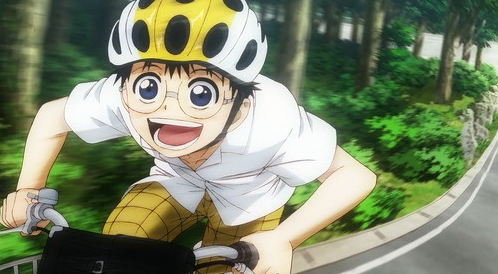
Up the Slope

Disclaimer: Onoda, Sakamichi is a character from Wataru Watanabe's Yowamushi Pedal.


Onoda, Sakamichi had an unhealthily obsession with anime. He was a typical anime nerd, collecting figurines and exclusives, eager to discuss theories with others.  He never thought himself athletic before he joined the cycling club—he didn’t even know that cycling was a sport; however, Onoda was a man who loved riding his bike.

The boy enjoyed the pure pleasure of experience when riding his bike: he enjoyed watching the scenery change and pass, transitioning from cityscape to nature and back, enjoyed the rhythm of pedaling and moving one foot after another, the revolutions therapeutic, even. He never complained about the journey or how long his trip took, not when he had his destination envisioned clearly and perfectly, resting at the forefront of his mind, the image just before his eyes as though it were reality—as though he were already in Akihabara before he even arrived.

Akihabara. The city is known to be a hub for anime and video games. In order to feed his obsession, Onoda makes a trip to Akihabara every weekend when school is in session and every day during summer vacation. Rather than spend 200 yen on bus fare, Onoda preferred to bike 40 kilometers to Akihabara so he would have more money to buy merchandise. Enthusiastic and one-track-minded about anime as he was, Onoda didn’t even consider the fact that he was training his body like an athlete, much less for cycling.

In a twist of fate, Onoda found himself in the cycling club in high school. In fact, he was a climber—just what the club needed for their Inter High team. He was a valuable asset, and he found himself incredibly thrilled by the prospect of riding bikes with friends.

When training and racing formally, Onoda’s inexperience is clear. His riding is sloppy, inefficient—he wobbles around, takes the outermost route on a turn, and has no concept of pacing himself. He shouldn’t have been able to stand a chance against other cyclists, but he barrels right through the obstacles ahead of him. The time he spent riding to and from Akihabara trained his legs and provided him with an outstanding cadence on a road racer. But Onoda’s true strength comes not from his training but rather his sheer love for bicycling, especially with companions to share the journey.

Onoda is all too eager to chase his teammates or rivals. He’s laughed at and underestimated because he lacks efficiency, but as his rival dances to the top of the slope, grinning, head held high, looking down at him, Onoda is hunched over his handlebars—head down, eyes downcast, tension in his shoulders, arms, and hands visibly tense, his posture like that of a man who has been completely devastated and has given up—preparing himself to roar as his adrenaline rush kicks in, allowing him to raise his cadence thirty revolutions per minute, his breathing labored, lungs struggling, gasping for air, only to look up with a grin spreading from ear to ear, fierce determination burning in his eyes, the light in them dancing with pleasure and excitement, making it known to the world that he had been smiling all along.  Onoda, Sakamichi is a man who smiles when he climbs.

Despite a mountain of unfavorable circumstances, whether it’s his lack of experience or a wall of one-hundred people ahead of him, road racing is fun. As long as road racing is fun, Onoda has the ability to push himself to the peak—literally and figuratively—of the mountain and emerge victorious at the top of the world.


Works Cited
Watanabe, Wataru. Yowamushi Pedal. Akita Shoten. 2008-2014. Print.